 |
新闻 | 视频 | 博客 | 论坛 | 分类广告 | 购物 | 简体/繁体 | 广告服务 | 联系我们 | 关于万维 | 登录/注册 |
 |
|
Why More Richmond Residents Are Choosing Private Personal Training Over Big-Box Gyms
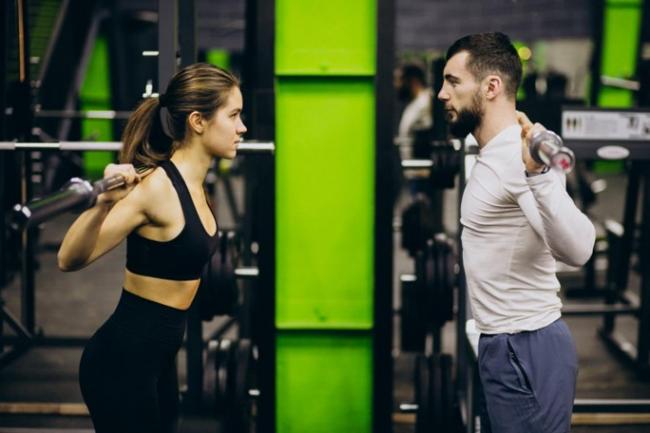
Image by senivpetro on Magnific
The commercial gym model has not fundamentally changed in decades. A large floor plan, hundreds of pieces of equipment, a membership price that makes individual use feel almost free, and a crowded environment that ranges from merely distracting to genuinely inhospitable, depending on the hour. For people who arrive knowing exactly what they need and how to execute it, this model works fine. For most people, it does not. Equipment is occupied, form goes uncorrected, programmes are self-designed by someone without the knowledge to design them effectively, and the motivation that flared at the point of membership purchase fades within the first few weeks.
The shift toward private personal training studios that has become visible in Richmond's fitness market is not a trend driven by novelty. It is a market response to the gap between what commercial gyms make available and what actually produces results for the majority of their members.
What the environment actually does to training quality
The cognitive demands of training in a crowded commercial gym are underappreciated. Navigating around other users, waiting for equipment, adjusting to ambient noise and activity, and monitoring one's own technique without external feedback all draw on the limited attentional resources available during a workout. The result is training that is less focused, less correctly executed and less effective than it would be in a calmer, more controlled environment.
The Canadian Society for Exercise Physiology (CSEP) is the national body that establishes professional standards for exercise physiology and personal training in Canada. Their framework for effective training programme design emphasises the principles of progressive overload, specificity and periodization, the same principles that are most consistently undermined by the improvisational quality of self-directed commercial gym training. A programme that cannot be executed consistently, because equipment is unavailable or because the environment makes focus difficult, will not produce the adaptations those principles are designed to deliver.
The case for specialist matching
Not all fitness goals are served by the same training approach. A person recovering from a shoulder injury needs a programme built around corrective exercise and careful load management, not a general strength programme with accommodations. A person over fifty with a priority on maintaining bone density and functional mobility needs a different stimulus than someone preparing for a powerlifting competition. A recent postpartum client has entirely different needs from someone training for a half-marathon.
The commercial gym model provides general equipment access and, in some cases, floor staff who are not specifically matched to a client's goals. The private studio model provides a trainer who specialises in the client's specific need and who designs the programme around that specialisation from the first session. The outcome difference is significant for anyone whose goals require more than a generic resistance programme.
BLK BOX Gym keeps its membership cap at twenty clients at any given time, which is not a business constraint but a deliberate service design. At that volume, every trainer knows every member's programme, history, current progress and specific physical considerations. The studio at 133-12838 Clarke Place in Richmond is equipped for personal training, not for the full range of equipment that a commercial gym uses to justify its price point. What it offers instead is a calm, focused environment where the training happens without the cognitive overhead of a busy commercial floor.
Their trainer matching model, where clients are paired with a specialist in their specific discipline, whether that is strength and conditioning, weight loss, bodybuilding, senior fitness or active rehabilitation, means that the programme a client receives reflects genuine expertise in their goal rather than a general fitness framework applied to a specific situation.
The time argument
Vancouver and Richmond professionals consistently cite time as the primary barrier to fitness consistency. A ninety-minute block at a commercial gym, which includes travel, parking, waiting for equipment and extended transition times, is not a viable commitment in a dense professional schedule. A sixty-minute private training session, where every minute is allocated to a specific training goal with no waiting or improvisation, delivers more effective stimulus in less total time.
The structured accountability of a scheduled appointment also matters in ways that open gym access does not. A commercial gym membership creates no social obligation to show up. A booked training appointment creates a specific commitment to a specific time with a specific person, which the research on exercise adherence consistently identifies as one of the most effective levers for long-term consistency.
What the investment comparison actually looks like
The price differential between a commercial gym membership and private personal training is real, and it is worth evaluating honestly against the comparison that matters: not cost per month but results per dollar spent. A commercial gym membership that a member uses sporadically, follows no effective programme on, and cancels after four months produces a very poor return on investment. Private personal training used consistently, delivering programme adherence and proper technique, produces measurably better physical outcomes per session. Over the course of a year, the cost comparison is far less decisive than it appears at the subscription sign-up stage.
 0
0

|
|
|
| 当前新闻共有0条评论 | 分享到: |
|
||||||||||
评论前需要先 登录 或者 注册 哦 |
||||||||||||
| 24小时新闻排行榜 | 更多>> |
| 1 | 饭局视频疯传!潘石屹谈为何不回国 内容炸 |
| 2 | 刘欢临终细节被曝!含泪离世 老婆女儿守在 |
| 3 | 习近平听完大力鼓掌 历史级画面引发全球疯 |
| 4 | 潘石屹曝任志强被抓前给11个人发信 名单疯 |
| 5 | 突发:8名枪手持AK-47血洗酒馆 酿17人死15 |
| 48小时新闻排行榜 | 更多>> |
| 一周博客排行 | 更多>> |
| 一周博文回复排行榜 | 更多>> |


